


On Making Words, in three parts: The Essay (you are here) · The Method · The Lexicon
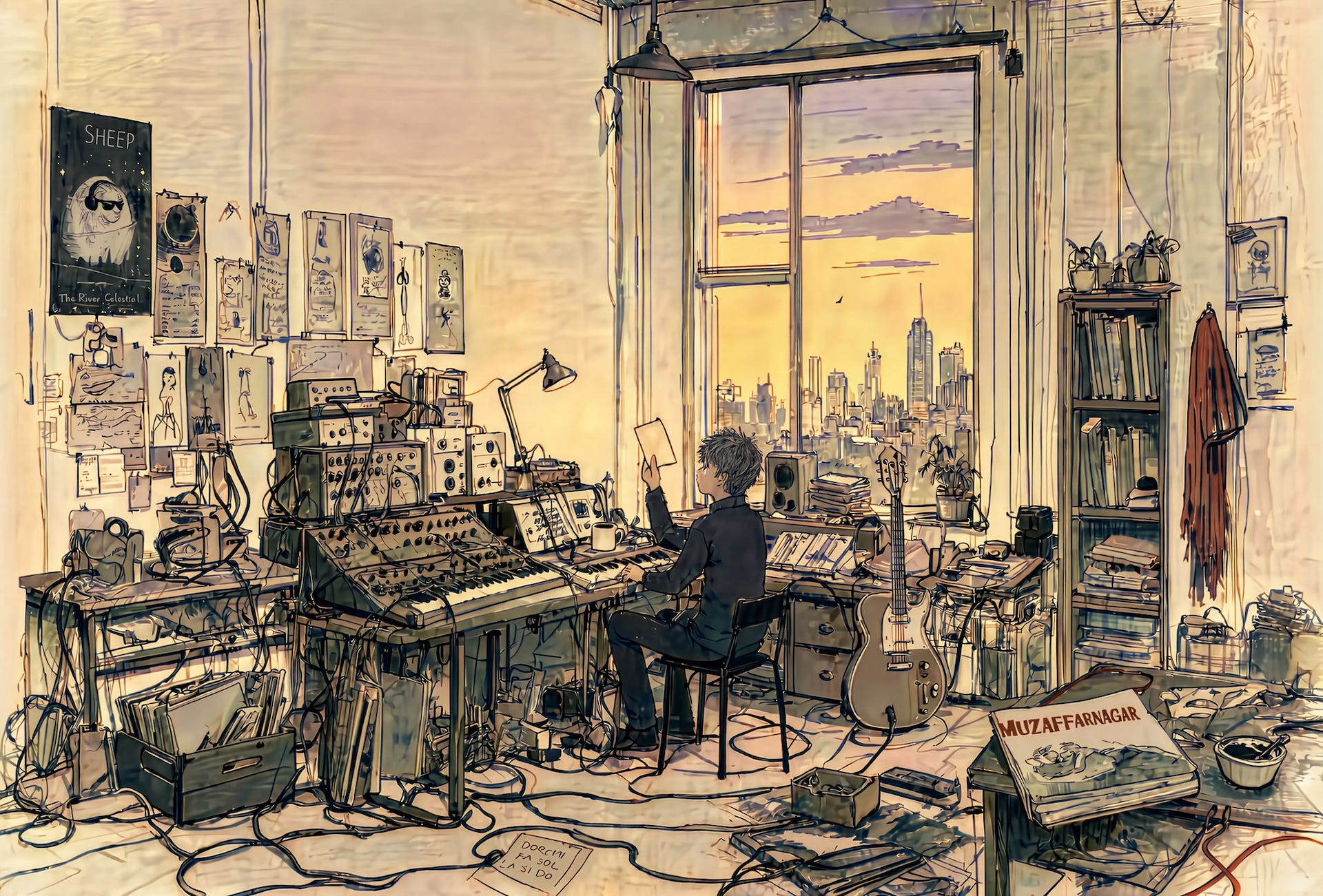
When Brian Eno, producer-extraordinaire of Talking Heads’ Remain in Light, U2’s The Joshua Tree and Coldplay’s Viva la Vida, and his own albums such as Music for Airports gets stuck in the studio he draws a card.
The card reads out in print a phrase, a statement, an idea, anything that puts the reader on a path, a track, a tangent, nevertheless, nudges in the general line of direction of creativity and play. For example, here are a few that are in the cards.
Honour thy error as a hidden intention
Use an old idea
Repetition is a form of change
He and the painter Peter Schmidt printed a deck of them in 1975, the Oblique Strategies, a hundred-odd small instructions for the moment the work stalls and you need one end of a thread to pull.1
Take the first of those cards, honour thy error as a hidden intention. In music or musical playing, it translates to. You play a wrong note, and rather than fix it you keep it and build the part around it. Eno dealt cards like these into the sessions for Bowie’s Heroes — the instrumental Sense of Doubt came out of that session. The intention of the statement on the card is this, to get unstuck, to move forward, to get back into the creative zone, or play.
***
I was stuck too, in a similar fashion, with my one person musician project Sheep. I was trying to build a set of songs that could go together in an album or an EP. I had a lot of doodles, short riffs of keyboards, guitar, drum beats, ideas, but none of these were helping me to get to an album. One would say I was stuck. So, I tried to get unstuck. I tried a version of Eno’s trick; instead of pulling out a card from a deck, I said let me come up with names of Songs, or create the song title first, and hope that that would lead to a sound, a vibe, a lyric, and therefore help me finish and package into an album. Make the title first, and let it lead was the idea. The word/words being the seed. The song grows out of it.
I liked song titles of a particular band that I was listening on repeat. I had been playing Parcels on repeat, the Australian band I came to through Daft Punk, who produced their single Overnight 2 , the last record the duo made before they split.overnight Parcels run several words together into one title: Tieduprightnow, Lightenup. A title pushed together like that has a rhythm of its own, a momentum you can start a song from. That was the trigger. Make the title first, and let it lead the sound. The word is the seed, and the song is whatever grows out of answering it.
***
People have long made words for themselves. Shakespeare gave us swagger, or his is the earliest hand we can find writing it down, which the textbooks like to inflate into invented.3 Fashionable, lonely, bedazzled. He wanted to explain a certain situation, a feeling, for which the language yet did not have the right word, and the language and its rules were accommodating enough to help him invent new words.
I wasn’t going to be the first nor the last to make up words of my own. In fact I had made one for myself, driftmost. I needed a word to explain a certain state of mind, the weather in your head, the climate in your brain, a state that sits between meditation (may be that is an overstatement), and daydreaming; a state of focus and flow at the same time'; a feeling of being adrift while still asteer (asteer is not a word in the dictionary, yet, but you can still see what it means).
Driftmost. Drift as in motion with no destination, and Most not a degree but a place (maybe it derives from möst, which means mast). I liked it enough to name a whole way of writing after it. This very blog. One handmade word leading to a way of thinking, a way of writing, sporadic but thoughtful, if you get the “drift”.
***
So I turned to ChatGPT (other LLMs are available). I promptly engineered a prompt. I gave it this one word and a single rule. Fuse two words into one. Never more than two words. Make the new word strike a new meaning, a new feeling, a new way of seeing, a new frame of reference that each of the word individually may not address that. Here is the one I made, I told it. Driftmost. Now make more like it.
I have a feeling LLMs thrive when there is a game or creativity involved, or that is what I think. Something to write about later. But now, let us see what the LLM came up with. Like all machines, it started whirring and it did not stop. The words kept coming, most of them noise; you had to steer it a little bit. Soulburn. Glimmerfade. Hopewane. But every so often one seemed to pique the interest. A few out of this melee of words spoke to me. They floated, they lifted, glowed in the dark and I already knew they belonged together. Five of them I set aside, and each became the seed of a song on a record I was already calling, The River Celestial.4 I would hand a word to the instruments the way Eno hands himself a card, and wait to hear what the word wanted to become.
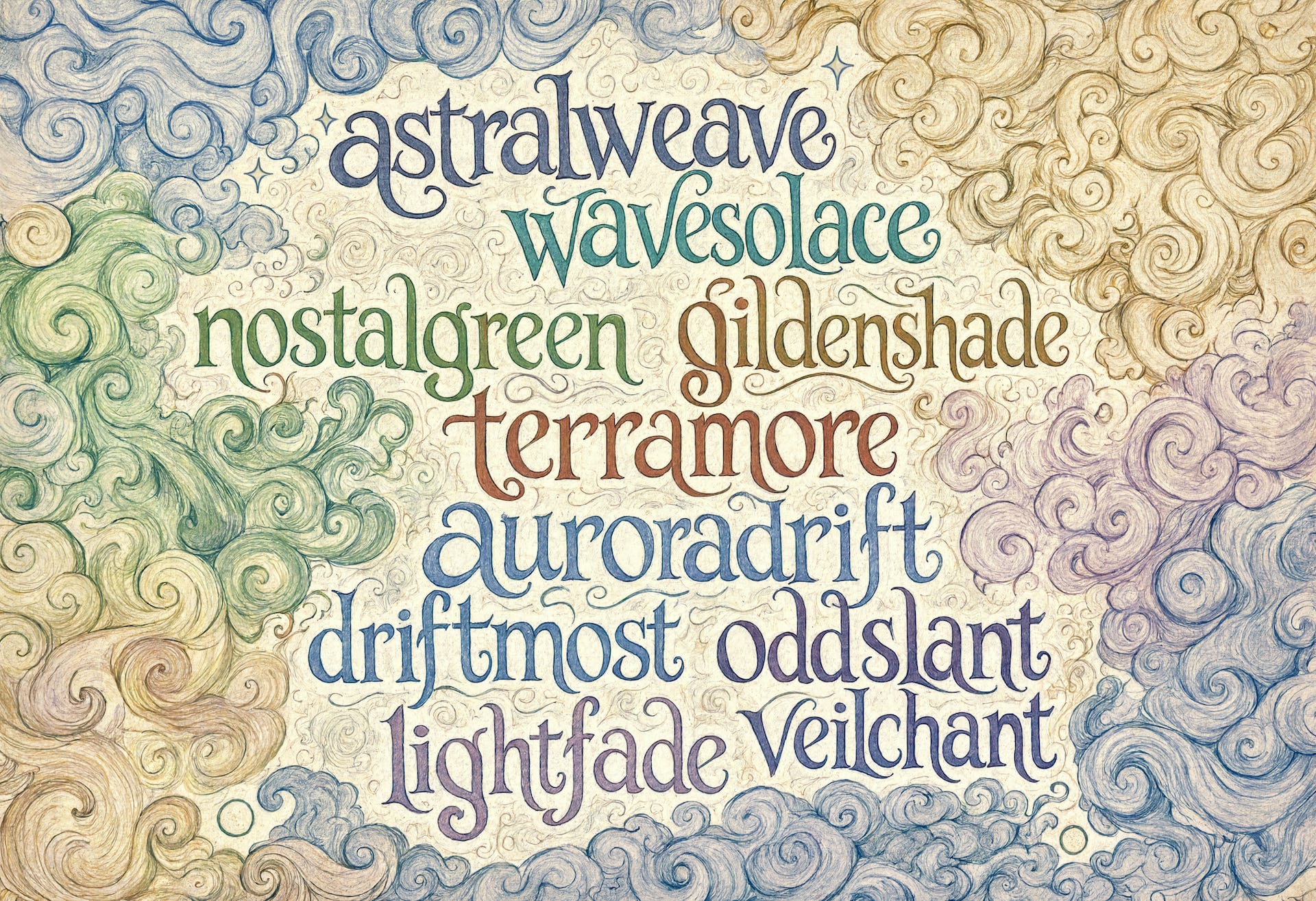
Two of the five came to me first. Auroradrift, for moving through a lit expanse without walking, carried by the place itself. Astralweave, for the threading of dream and memory and destiny across a distance too large to feel as distance. The two of them told me at once what the record would be, because it was already made of exactly this: height and weightlessness, sound hung in empty space with nothing underneath it. The words were a match struck against something that was already in the room.
A record made entirely of sky has no weight, so I went back through the pile for ballast. Terramore — terra and amor, an earth-love, the ache for the particular ground that made you. After three songs spent aloft, the album wanted soil, and Terramore is the act of looking back down at it.
For the close I wanted blood in it. Scarletflow, a current of feeling at full colour, the warm answer to all that cool drifting. The way in came last of all: Serensurge, a quiet rising of calm, the breath you take before the lift.
So the five found their order. Serensurge opens on a still rising. Astralweave and Auroradrift lift off into the dark. Terramore brings the ground back. Scarletflow closes in heat. A river that climbs into the sky, wanders the empty reaches, and comes home to the body.
Then the words became music. Each title went out as a brief, a mood handed to the instruments, and what came back was ambient and serene, long drones with no edges, the kind of thing Eno had in mind when he coined the word ambient for records like Music for Airports. The names had promised something adrift and lit from inside, going nowhere in the best possible way, and the record kept the promise. The album born out of an oblique strategy.
***
What surprised me most, once the words sat side by side, was how little of it was random. The variations from that one seed fell into families on their own, without my sorting them. Nostalgreen drifted toward the childhood greens. Etherburn landed on the bad three in the morning. Wavesolace was the comfort you do not expect. That was the tell: one word, handed to a machine, had quietly decided what kind of album this would be.5
This is where my way of making words parts from Shakespeare’s. He made each one by hand, alone, out of need. I made a single word by hand and let a machine make the rest, and what remained was the work of taste, picking Gildenshade out of a hundred near-misses that only looked like words. Both ends were mine, the first word and the long afternoon of choosing; everything in between came from the machine, and I do not mind saying so. Authorship can sit in the seed and the selection as surely as it sits in the making.
A coined word is the smaller half of the gift. The larger half arrives later, when a stranger reads one and recognises a thing they have carried for years with no name on it. They borrow the word. For a while the language is a fraction wider than it was, and you are no longer the only one standing out in that particular weather.
The full set of words — meaning, usage, origin, and mood — is collected in The Dictionary of Rajheshian Words.
Companion: The Word-Coining Method — this same method stripped to a bare procedure
Brian Eno and Peter Schmidt, the Oblique Strategies deck (first edition 1975) — cards drawn at random to break a creative deadlock. Open-source web versions let you draw one yourself; see the implementations gathered under the oblique-strategies tag on GitHub.
First recorded use is not invention, a distinction the “1,700 words Shakespeare coined!” lists tend to skip. Bedroom and eyeball, both often credited to him, predate him. See Mental Floss — the ones he made and four he didn’t and the Shakespeare Birthplace Trust.
The River Celestial is the English of the opening of Ilayaraaja‘s Aagaya Gangai — aagaaya gangai, the Ganges of the sky. The name came down to this album, by Sheep, from an earlier track on And Scene, Filmy Music.
These and the rest, with meanings and origins, are collected in The Dictionary of Rajheshian Words. The bare procedure for coining them lives in The Word-Coining Method.